Content orchestration: Paving the way for dynamic digital experiences
Updated on December 15, 2025


Inspiration for your inbox
Subscribe and stay up-to-date on best practices for delivering modern digital experiences.
You hear the word “connection” a lot when you travel: “I need to make my connection if I don’t want to be late,” “My connecting flight is in two hours,” “I need to connect to the interstate highway,” and so on.
But journeys aren’t simply a question of getting from point “A” to point “B.” There are lots of little connections within those bigger connections: the quick rest stop to buy snacks at the train station, the short break from the highway to fill up on gas, the walk (or run) from airport security to the departure gate — the list goes on.
Every smaller connection contributes, in some way, to the bigger journey from origin to destination and, typically, the easier and smoother those connections are, the more enjoyable the experience. If those connections are blocked, difficult to navigate, or don’t happen at the right time, the journey gets less enjoyable.
Content development works the same way. The more effectively we can connect the multiple different stages of the content creation journey, the easier it becomes to align with brand strategy, create high-quality content, and deliver the kinds of content experiences that engage and convert audiences.
To achieve that, we need to start focusing on content orchestration.
What is content orchestration?
Content orchestration refers to the coordination of the various stages and components of the content production process, from ideation and creation through to publication, optimization, and retirement.
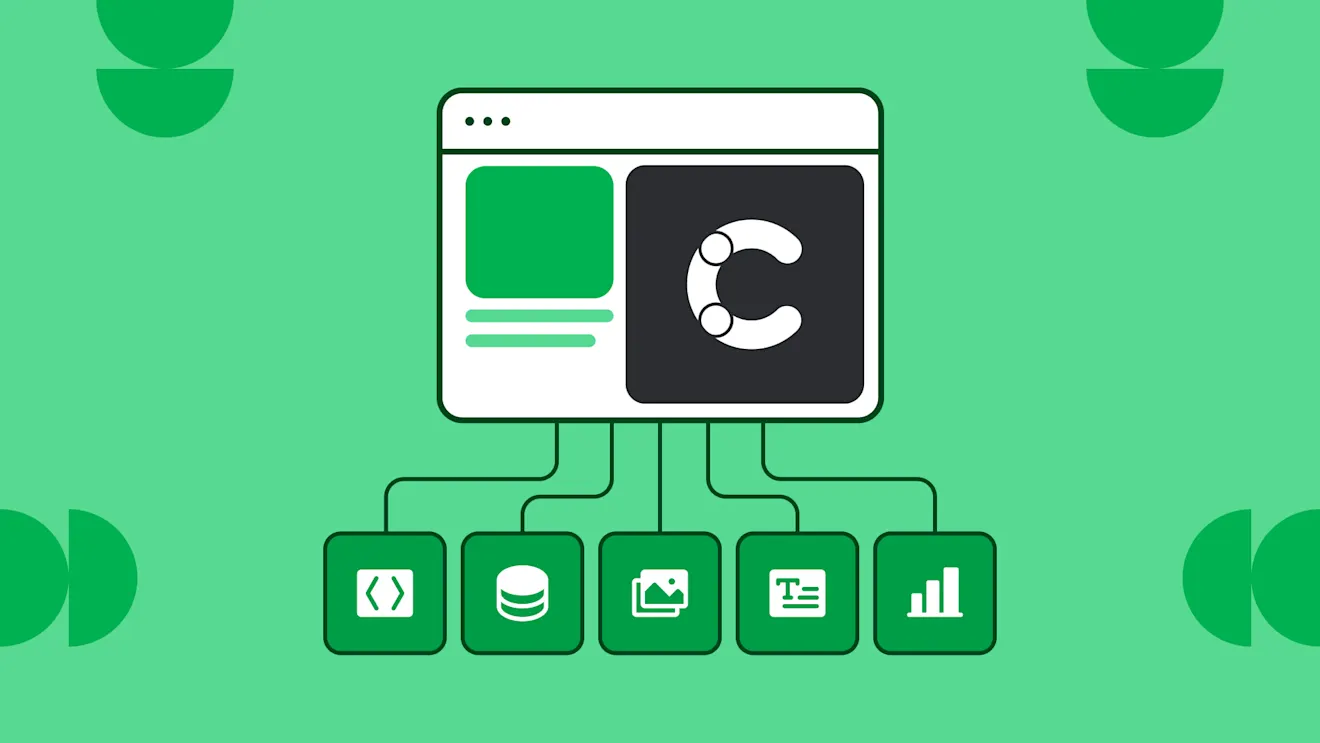
The term covers the creation, storage, and retrieval of digital content assets, and the collective integrations of the tools that content teams use to complete such orchestration tasks, including the content management system (CMS), digital asset management (DAM), customer relationship management (CRM), personalization and analytics, and so on.
Content orchestration also covers all the people, teams, and cross-dependencies involved in content creation, which includes writers, designers, editors, marketers, and developers working across the front and back ends of the digital ecosystem.
Essentially, content orchestration is the process of connecting all the individual data points, tech, and people within a content production workflow, as part of a single journey.
Why does content orchestration matter?
Content orchestration matters because content production processes are complex.
Large businesses have to manage vast databases of experiential assets, across sprawling digital ecosystems, and publish content across multiple websites and channels for multiple brands, in multiple languages — all while market pressure changes the landscape constantly. If you can’t stay on top of operational challenges in that environment, you’re inviting content chaos.
Focusing on content orchestration helps improve the way that team members locate and activate critical information as they create and publish content. It ensures they’re able to leverage the right technology at the right time, collaborate effectively, optimize the content once it goes live, and maintain a consistent, clear brand voice.
Let’s use an example: a business blog post. When a blog draft is completed by a writer, an editor needs to loop in all the relevant stakeholders to perform the necessary checks and reviews prior to that content going live. Similarly, they need to ensure the blog is localized for the regions where it will be published so there are no jarring spellings or references, or brand inconsistencies that might undermine engagement.
Here, good orchestration means that the editor is able to do all this as efficiently as possible.
With that in mind, they’d typically leverage the capabilities of their content platform to orchestrate. They could apply role-based permissions tools to ensure that the blog only moves forward once the relevant sign-offs have been logged, and then use a built-in localization tool to adapt the final version of the blog for the various regions in which it gets published.
Content orchestration is less about “good” content creation in and of itself and more about making good content creation possible — that is, connecting content teams with the data and technology they need, when they need it.
The content orchestration challenge
“Making content creation as efficient as possible” seems like an achievable goal, right?
Absolutely. But “achievable” depends on the content platform you’re using.
The problem is, in some legacy platforms, accessing the right data and tech is easier said than done. That’s because these content platforms tend to be monolithic in nature rather than API-first, tightly coupling their back and front ends to the point that they make it difficult to add new features and functions to content workflows, other than those the vendor explicitly allows.
So, while you might seemingly get a lot of out-of-the-box functionality to build a website and start publishing content with a legacy content platform, you won’t get much flexibility as your business grows and adapts over time.
Orchestration roadblocks
That means, as your content needs evolve, your ability to orchestrate won’t be able to keep up with demand.
And that can create problems for implementing content orchestration. You might see a reduction in content velocity as teams have to jump in and out of different CMSes to manage content on different channels; a growing dependency on developer support in order to make changes to content without disrupting site formatting; and a fragmentation of brand voice as all that copying and pasting introduces errors and discrepancies that need to be corrected across every instance of the same content in the ecosystem.
Long story short, legacy systems throw up content orchestration roadblocks. Those roadblocks inevitably lead to silos that make it difficult for teams to access data and work together, which undermines the digital experiences you’re trying to create, harms engagement, and, ultimately, hits your bottom line.
What does good orchestration look like?
Hopefully, it’s clear that good content orchestration isn’t just about accelerating your content’s time to market.
Good orchestration gives autonomous teams the capacity to work together more effectively, with fewer dependencies, and with the tools and resources they need integrated seamlessly into their workflows. It enables brands to be more economical and precise with their content, creating an asset once and then being able to reuse it everywhere. And it means stronger, more consistent digital experiences across every touchpoint and channel.
How do you achieve that standard of orchestration? The best place to start is your content platform — so let’s do that.
Contentful content orchestration
For growing brands with evolving digital ecosystems and busy publication schedules, legacy content platforms aren’t the most effective way to execute a content orchestration strategy.
If you're struggling with the friction and inflexibility of monolithic content management architecture, it's time to think differently about your content and workflow orchestration challenge. You can do that with a modern content platform like Contentful.
Unlike more basic CMSes and legacy counterparts, the Contentful Platform is built with an application programming interface-first (API-first) philosophy, which prioritizes the interoperability of the tech stack and the seamless transfer of data between teams and tools. That approach unlocks the connections between teams and data, between data and content, and between content and the digital experiences that define brands.
Here’s how Contentful helps you get content orchestration right.
Structured content
Contentful supports structured content modeling, breaking digital assets down into their component parts and then allowing teams to reuse and reassemble those parts like modular building blocks. The structuring of content means that content teams can spin up new content in minutes, tactically leverage modern GenAI tooling, and launch new campaigns with maximum speed and efficiency, all while protecting the consistency and identity of the brand across channels and touchpoints.
Role-based review and publication
Contentful’s Workflows feature enables role-based permissions around editing, review, and publication steps, allowing content owners to steer content through the production workflow with close control. For example, once content is complete — or even in review — editorial administrators can choose to delegate follow-up tasks to specific users or teams, or schedule content for publication as individual pieces or in larger batches.
AI & Automation
Contentful’s AI Actions feature streamlines content management workflows with GenAI-powered automation tools. AI Actions provides a selection of templated automations, applicable at the click of a button, which include actions like generating meta-content tags, alt-text image descriptions, and personalization recommendations. AI Actions can also be run in bulk or automatically as part of a workflow and they are customizable, so they can be iterated on to address any new content requirements as they emerge.
Single source of truth
In Contentful, all your content assets are delivered via a centralized system of reference; a single source of truth approach that ensures content can be deployed to any digital channel seamlessly and at high performance. This includes third‑party system references powered by backend serverless workloads known as Contentful Functions that resolve and cache data at delivery time with no additional frontend API calls needed. With Functions, data behaves as if it was stored directly in Contentful, and content changes in source systems are automatically respected across the ecosystem, further protecting brand voice and consistency, and improving workflow efficiency.
Effortless scaling
The inherent extensibility of Contentful means that brands can add new features and functionalities to their tech stacks as their content needs change — without any risk of disruption or downtime. That extensibility ensures that brands can effortlessly scale content operations to keep pace with growth.
Start your journey with Contentful
All content orchestration platforms ultimately face a connection challenge. The Contentful Platform gives you the power to connect every data point, every tool, and every step in your content workflow, so that you not only build digital experiences faster, but ensure that they take your customers exactly where they need to go.
If you’re ready to start your content orchestration journey with Contentful, explore our latest product releases, browse a vast Marketplace of content orchestration tools, apps, and plugins, or contact our sales team to arrange a platform demo.

Inspiration for your inbox
Subscribe and stay up-to-date on best practices for delivering modern digital experiences.
Meet the authors

Lasse is a solutions expert at Contentful, providing customers and partners alike with strategic insights and advisory within topics like composable architecture, integrations and scalable content operations. He's a passionate problem solver and empathetic communicator at heart.
Related articles
Real time personalization in 2026: What’s working and what’s next
October 31, 2025
What is multimodal AI and why does it matter to digital content teams?
November 19, 2025

Contentful leaders on the shifts shaping marketing, AI, and digital experiences in 2026
January 12, 2026